JIU JITSU

Programs/07 Brazilian Jiu Jitsu

Brazilian
Jiu Jitsu

The Art of Human Chess

BJJ teaches you to control, escape and submit an opponent using leverage and technique instead of size and strength. It is one of the most effective self-defence systems in the world — and one of the most rewarding to learn.

Gi& No-Gi Training
5Adult Belt Ranks
AllAges & Sizes
17+Years Legacy
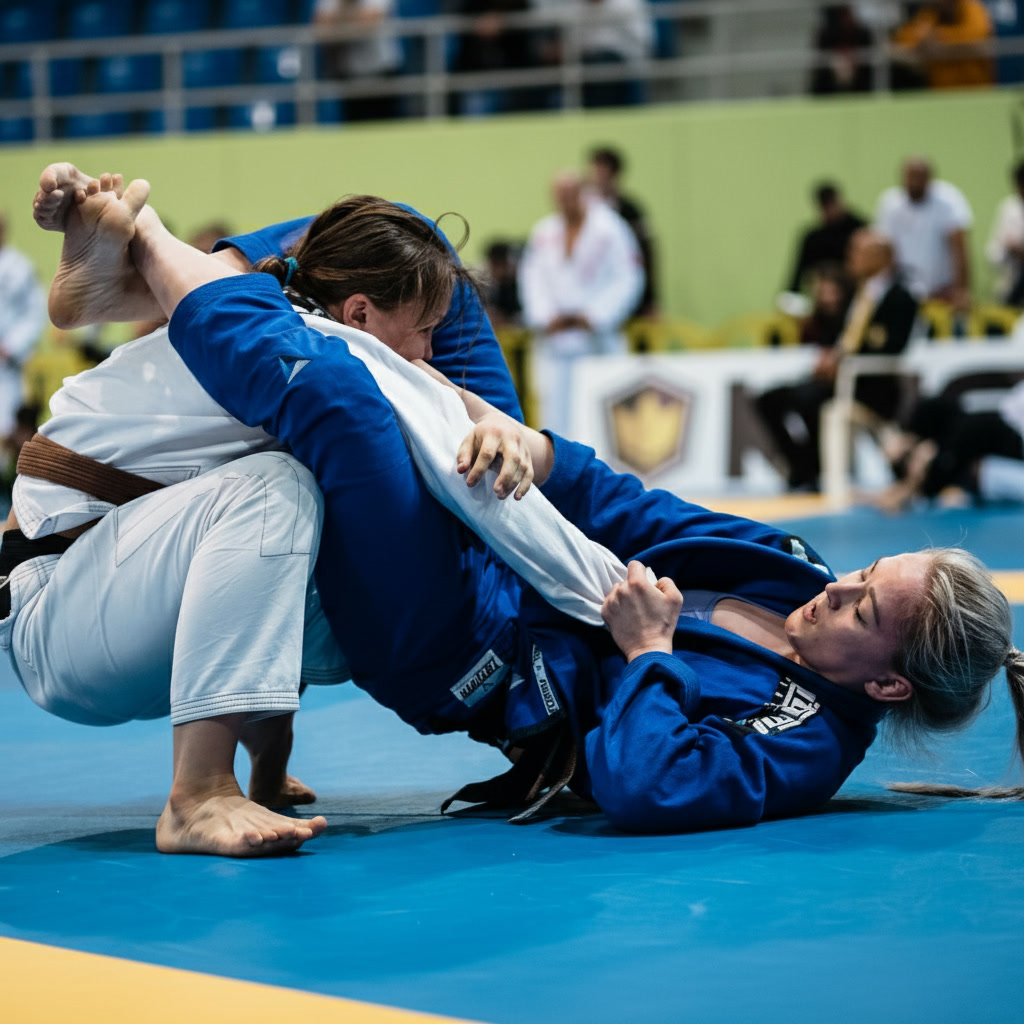
Brazilian Jiu Jitsu training at Q Combat Martial Arts Academy, Bangalore Leverage Beats Strength

Affiliated To

Brazilian Jiu-Jitsu Organization India (BJOI) - Chokes and More Miko Hytonen Academy
Brazilian Jiu-Jitsu Organization India (BJOI) - Jiu-Jitsu Bengaluru

Technique Over
Strength

Brazilian Jiu Jitsu is a grappling martial art focused on ground fighting, positional control and submission holds. It grew out of Japanese Judo and traditional Jiu Jitsu and was refined in Brazil by the Gracie family, who proved that a smaller person could defend themselves against a bigger, stronger opponent.

Rather than trading strikes, a BJJ practitioner takes the fight to the ground, gains a dominant position and finishes with a choke or joint lock. Every movement is based on leverage, timing and body mechanics, which is why BJJ is often called “human chess”.

At Q Combat, BJJ is taught as a complete discipline and as a vital part of our Kudo and MMA programmes. Most real confrontations end up on the ground — BJJ makes sure you know exactly what to do when they do.

Ground Fighting Submissions Self Defence Gi & No-Gi Human Chess

History of BJJ

From a Japanese Judoka in Brazil to the foundation of modern MMA.

1910s

Judo Arrives in Brazil

Mitsuyo Maeda, a Kodokan Judo expert, settles in Brazil and begins teaching his grappling art to local students.

1920s

The Gracie Family

Carlos Gracie and his brothers, including Hélio Gracie, adapt the techniques, putting the emphasis on leverage and ground fighting so smaller people can win.

1993

The UFC Proves It

Royce Gracie wins the first UFC event against bigger opponents from other styles, showing the world how effective BJJ is.

Today

A Global Sport

BJJ is practised worldwide in both Gi and No-Gi formats, and is an essential skill for every modern MMA fighter — including our athletes at Q Combat.

The BJJ Curriculum

Learn to fight, escape and attack from every position on the ground.

01

Positions & Control

Guard, mount, side control and back control — how to reach dominant positions and hold them.

02

Escapes

Bridge, shrimp and frame your way out of bad positions. The first and most important self-defence skill.

03

Sweeps & Reversals

Turn the tables from the bottom using leverage and timing, and finish on top.

04

Submissions

Chokes, armlocks, shoulder locks and leg locks, taught with control and a strong focus on partner safety.

05

Takedowns & Guard Pulls

Getting the fight to the ground on your terms, with Judo- and wrestling-based entries.

06

Live Rolling

Positional sparring and supervised live rolls that test your technique, strategy and conditioning.

Gi & No-Gi

Both formats build different skills. Training in both makes you a complete grappler.

Gi Training

Trained in the traditional kimono. Collar and sleeve grips open up a huge range of chokes, sweeps and controls, and develop patience, precision and grip strength.

No-Gi Training

Trained in rash guards and shorts. Faster and more athletic, with a focus on underhooks, wrist control and leg locks — and it carries directly into MMA and Kudo.

The BJJ Belt Journey

BJJ belts are earned through skill, consistency and time on the mats.

White Belt

Learn the fundamentals: survival, escapes and the core positions.

Blue Belt

Build a solid defence and a reliable set of attacks from every position.

Purple Belt

Link techniques into chains and develop your own style of game.

Brown Belt

Refine timing and pressure, and begin to coach and lead others.

Black Belt

Technical mastery and a deep understanding of the art.

Kids follow their own belt system with grey, yellow, orange and green belts before moving to the adult ranks.

Benefits On & Off the Mat

BJJ trains the body and the mind together.

Real Self-Defence

Learn to control and neutralise a threat without striking, which makes it ideal for women, kids and anyone who wants calm, controlled defence.

Total-Body Fitness

Every roll builds core strength, flexibility, grip and cardiovascular endurance — without repetitive impact on your joints.

Mental Strength

Staying calm under pressure, solving problems and thinking several moves ahead builds patience, humility and confidence.

Pairs Perfectly With

At Q Combat you can cross-train across 8 disciplines under one roof.

BJJ FAQs

I’m not strong or fit. Can I still do BJJ?

Absolutely. BJJ was built for people who are not the biggest or strongest in the room. Your fitness and strength will improve naturally as you train.

Is BJJ safe? Will I get hurt?

BJJ is one of the safest combat sports to train, because there is no striking in regular classes. Submissions are applied slowly and with control, and you can “tap” at any time to stop a technique. Our coaches supervise every session.

Is BJJ good for kids?

Yes. Kids’ BJJ builds confidence, body awareness, discipline and practical anti-bullying skills, which let a child control a situation without striking.

What should I wear for my first class?

Comfortable athletic clothing without zips or buttons is perfect for a trial class. Our coaches will guide you on the Gi and No-Gi uniforms if you decide to continue.

How is BJJ different from Judo?

Judo focuses mainly on throws and takedowns from standing. BJJ focuses on what happens after the fight hits the ground — control, escapes and submissions. Many of our students train both.

Where to
Train BJJ

Brazilian Jiu Jitsu Organization India — Bengaluru

Near BMTC Bus Stop,
Kumaraswamy Layout 2nd Stage,
Kumaraswamy Layout,
Bengaluru, Karnataka 560111

Roll With Q Combat

Book a free trial BJJ class at your nearest branch and discover why it’s called the gentle art.